

| |
|
|

Hot on the heels of trendy restaurants worldwide, many properties areincorporating organic foods into their menus.
By Karen Butler
 September,with its bountiful harvests, marks the Organic Trade Association's (OTA) annualcelebration of National Organic Harvest month. The OTA represents the organic industry inthe United States, Canada and Mexico--working to promote organic products in themarketplace, as well as protecting the integrity of organic standards. This is no easyfeat considering the self-imposed strict requirements the OTA wants the government toapprove and regulate nationally via the U.S. Department of Agriculture (USDA). But in anindustry currently enjoying 25 percent annual growth or about $6 billion annually, bothfarmers and the public want an organic certification program.
The goal of organic farming is to decrease--if not eliminate--the use of potentiallyharmful chemicals and methods of production in conventional agriculture. The list ofoffenders is widespread; chemical pesticides and fertilizers involved in growing producebuild up in the soil, as well as on the produce, year after year. Some foods even undergointentional irradiation--the use of applied radioactive rays to kill bacteria.
Besides affecting fruit, vegetables and cotton, non-organic practices also can harm theanimal kingdom. Animals routinely are injected with artificial growth hormones andsteroids so they will grow faster and produce more milk or eggs. Antibiotics--in theabsence of any illness--are added to cattle feed, not to mention the pesticides ingestedby eating average farm-grown grains. Animals tend to accumulate pesticides andcontaminants in their fatty tissue, which is then passed on to the consumer at mealtime.
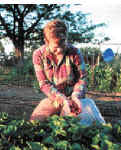
So how do organic farmers find ways around conventional methods? Instead of usingchemical fertilizers, natural strategies are employed to maintain a healthier soil. Thefoundation of going organic includes using manure, algae, composting and naturally-occurring plant and mineral extracts. Amy Kremen, owner and grower for Morning StarGarden, explains: "I've planted clover 'living mulches' in pathways and crop beds tohelp soils retain moisture so I can irrigate less and suppress weeds withoutchemicals."
In addition, biodiversity--planting an assortment of crops that vary from the mainharvest, thereby attracting helpful bugs--benefits both the harvest and the soil. Kremeninterplants nasturtium flowers with cucumbers to naturally deter pesky cucumber beetles.In the end, a farm might not yield as much product, but many consider the quality to bebetter; therefore, justifying a slightly higher price in the marketplace.
In terms of the financial investment, consumers might be surprised. According toHeather Granato, editor of Organic & Natural News¨ magazine,industry data shows that the cost of eating organically is comparable to that of eatingconventionally. However, the key to keeping the cost of organic eating down is to eatseasonally--choosing organic foods that are in-season in your area.
Independently-owned properties have the perfect venue for incorporating organic foodsinto their menus. Since most small properties attempt to capture the flavor of theirlocale, using organic ingredients from the area spices up meals and the town's economy.Inn Serendipity in Browntown, Wis. does not use any chemicals on its home-grown fruit orvegetables. Fresh produce from the inn's gardens always is a part of the hearty vegetarianbreakfasts served to guests.
Relying on small-town ingredients certainly doesn't exempt a property from achievinggastronomical feats of greatness. Sooke Harbour House, a 13-room property in Sooke,British Columbia, Canada, has received critical acclaim from Zagat to Gourmet¨and countless publications in between. The property grows salad greens and hundreds oforganic herbs, buying everything else from local farmers. In Gourmet magazine's1997 survey of the best meals at properties across the globe, Sooke Harbour Houseout-ranked millions of eateries, including several Four Seasons' restaurants.
Producing foods without the conveniences of modern technology obviously requires moretime and energy, but organic advocates pledge it's worth it. Lisa Kivirist, co-owner ofInn Serendipity, says increased costs haven't been a factor in their decision to growtheir own produce. "There is--without a doubt--a wonderful and delicious differencein taste with home-grown, organic fruits and veggies, she says. "They are much moreflavorful and succulent."
Jean and Dud Hendrick of Deer Isle, Maine's Pilgrim's Inn have long been dedicated toproviding their guests with fresh, organic foods. They have found guests to be receptiveto the sight of their gardens, as well as the fact that pesticides and other chemicals arenot used.
 The change toorganic doesn't have to occur overnight--try a couple of products and see what you andyour guests enjoy. Many grocery stores carry a small selection of organic produce;otherwise advocates suggest you request them. Such was the case with stores stocking PaulNewman's non-profit line of foods, Newman's Own Organics¨, which can be foundin grocery stores nationwide.
The demand for organic food also has paid off in many natural and conventional storesfor Horizon Organic Dairy¨, the only national fresh milk brand--organic orconventional--in the country. The company recently saw its 1999 net sales rise 72 percentover 1998's figures, which had just risen 67 percent from 1997's figures. 1999's record$84.8 million in sales resulted from an organic line of refrigerated dairy productsincluding milk, eggs and cheeses as well as yogurt, butter and juices. And don't thinkorganic equals boring. Orange-Carrot juice, Chocolate milk and Apricot Mango with Gingeryogurt are standard flavors for Horizon Organic¨.
Besides coming in creative flavors, organic foods also are available in forms mostpeople don't even think about. Panorama Brewing Co. has gone nationwide with its varietyof small-batch organic craft beers and, for years, several companies have manufacturedwines made from organic grapes.
If your local grocery store doesn't offer organic food, don't rule out a natural orhealth food store, many of which have national chains. Wild Oats Market and Fresh Fieldsstores provide a wide assortment of organic and natural products and their inventoriesgrow daily. Although Kivirist grows most of her own produce, when she buys, she choosesorganic products such as Whole Foods Market's peanut butter (for homemade smoothies), ormail-order organic products such as Equal Exchange's coffee or Serendipitea's tea.
Farmers' markets are another good source, especially since many independent propertyowners shop there anyway. An estimated average of 40 percent to 60 percent of theparticipating growers farm organically.
Another option is working with a Community Supported Agriculture (CSA) project, wherebyorganic products are delivered weekly to a community. Since the order is long-standing andlarge, the price is often much lower than an order for a single location would be. Thisfurther supports an "eat seasonally" menu--incorporating Mother Nature's giftsinto your meals if and when she gives them.
September provides property owners an excellent opportunity to investigate forthemselves. Check with your local natural food store for details about National OrganicHarvest month events in your area, or log on to www.organic.orgfor more information.
In addition, Inn Serendipity's Web site, www.innserendipity.com,provides an abundance of organic and environmentally-conscientious information, as well asthe story behind the innovative organic partnership between their property and the MichaelFields Agricultural Institute.
 | Copyright © 2000 by Virgo Publishing, Inc. |